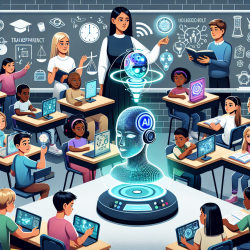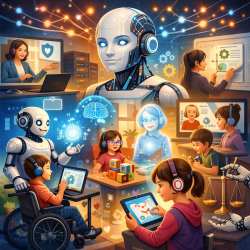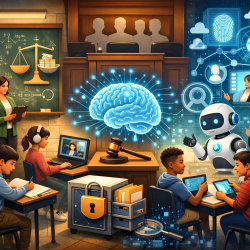
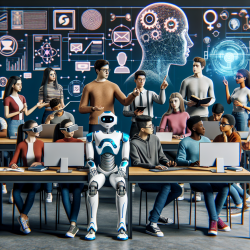
Since ChatGPT arrived in late 2022, generative AI has gone from “new and weird” to “everywhere.” Students can use it to brainstorm, summarize, translate, draft essays, explain math steps, and even quiz themselves. That’s the promise: more support, more speed, more access.
But in schools, the big question isn’t whether AI exists. It’s how students are actually using it, how they feel about it, and what adults should do next—especially for middle and high school learners who are still building study habits, judgment, and digital literacy.
A recent study titled Impacts of Artificial Intelligence on Middle and High School Students (Wang & Bie, 2025) helps answer those questions using a survey of 185 U.S. students in grades 6–12. The findings are practical, sometimes surprising, and very relevant for school leaders who are trying to set AI policies that are fair, realistic, and focused on learning.
A Quick Look at the Study (In Plain English)
The researchers surveyed 185 middle and high school students about:
- How often they use AI
- Whether they use AI for homework
- Whether teachers allow AI for assignments
- Whether AI improves knowledge and engagement
- Concerns like cheating, job security, misinformation, privacy, and long-term harm
The study used the Technology Acceptance Model (TAM), a well-known framework that suggests people are more likely to use a technology when they believe it is useful (and easy to use). In this survey, “ease of use” wasn’t directly measured, but “usefulness” and “risk” were.
How Much Are Students Using AI?
AI use is not rare—and it’s not limited to a small group of “tech kids.” In this sample:
- 17% said they never use AI
- 28% said they use AI almost daily
- 43% were classified as frequent users (weekly or daily)
- 43% said they have used AI to complete homework
That last number matters. Nearly half of students reported using AI for homework, which means AI is already part of the learning ecosystem whether a district policy mentions it or not.
The Biggest “On/Off Switch” for AI Use: Teacher Permission
One of the clearest findings: teacher policy strongly influenced whether students used AI for homework.
- When teachers allowed AI, 65% of students reported using it for homework
- When teachers did not allow AI, only 24% reported using it
This is a powerful insight for administrators: students aren’t only driven by curiosity or convenience. Many are responding to adult expectations. Clear guidance doesn’t just reduce confusion—it changes behavior.
For schools, this suggests that “we’ll just ban it” or “we’ll just ignore it” are both weak strategies. Students are looking for rules they can follow. If the rules are unclear or inconsistent across classrooms, students will get mixed messages, and enforcement will feel unfair.
Students Think AI Is Helpful… But Not Always Motivating
The study separated “usefulness” into two student-reported outcomes:
- Knowledge improvement: 50% said AI improved their knowledge a little or a lot
- Engagement improvement: only 27% said AI improved their engagement a little or a lot
In other words, many students see AI as informative, but fewer see it as inspiring.
This distinction is important for educators designing AI-friendly instruction. If AI becomes a shortcut that provides answers without building curiosity, students may learn facts while losing the productive struggle that builds confidence and independence.
Demographic Differences: Use Is Similar, “Usefulness” Is Not
Interestingly, the study found no statistically significant differences in how often students used AI across gender, race, or school level. Access and usage were fairly similar.
But perceptions of usefulness were different:
- Males rated AI as more useful than females
- High school students rated AI as more useful than middle school students
- Asian students rated AI as more useful than other groups in this sample
- Frequent users rated AI as more useful than non-frequent users
This matters because it hints at an “AI confidence gap.” If some groups feel AI is less useful, they may be less likely to experiment with it in productive ways (like studying, revising, or practicing). Over time, that could create uneven benefits—another version of the digital divide, but centered on AI literacy and comfort.
Risks: Students Are Worried—and It’s Broadly Shared
While usefulness varied by subgroup, perceived risk was high across the board, with no major demographic differences. Students largely agreed AI brings real problems.
Key concerns reported:
- 53% believed AI would lead to more academic dishonesty
- 45% worried AI could make it harder to find and keep a job in the future
- 81% worried AI would increase misinformation (like deepfakes)
- 56% worried about loss of privacy (like invasive surveillance)
- 44% worried a superintelligent AI could be harmful to humanity
That 81% misinformation concern stands out. Students are not blindly trusting AI. Many already suspect that AI can produce believable but incorrect content—and that it can spread quickly.
What Schools Can Do Next (Practical Moves, Not Panic)
The study’s findings point to a balanced approach: teach students how to use AI ethically and effectively, while also protecting academic integrity and equity.
1) Make teacher guidance consistent and visible
Because teacher permission strongly affects behavior, schools should avoid a patchwork of rules. Consider a shared, school-wide baseline policy that answers:
- When is AI allowed (brainstorming, outlining, studying)?
- When is it not allowed (final drafts, tests, original reflections)?
- What counts as unacceptable use (copy/paste submissions, undisclosed AI writing)?
- How should students cite or disclose AI support?
2) Teach “ethical AI” like a real life skill
Students want guardrails. Ethical AI instruction can include:
- How to verify AI outputs with trusted sources
- How to spot hallucinations, bias, and missing context
- How to use AI without replacing thinking (explain-your-work requirements)
- What academic honesty looks like in an AI world
3) Design assignments that reward thinking, not just answers
If the goal is learning, assessments should value process. Schools can reduce dishonest AI use by shifting toward:
- Draft checkpoints (outline, first draft, revision notes)
- Oral explanations or short conferences
- Personalized prompts tied to class discussion or local context
- Reflection questions: “What did you change and why?”
4) Watch for equity issues in AI literacy
Since usefulness perceptions differ by group, schools should ensure all students get structured opportunities to learn AI skills—especially younger students who may need more coaching on judgment, source-checking, and responsible use.
Why This Matters to School Support Services (Including Teletherapy)
At TinyEYE, we work with schools every day, and we see how technology changes student behavior—sometimes in ways adults don’t expect. AI is no different. It can support learning, but it can also raise stress (fear of cheating accusations, confusion about rules, pressure to keep up) and amplify misinformation that affects student well-being.
Clear policies, consistent expectations, and explicit instruction help students feel safer and more confident. When students know what’s allowed and why, they can focus on learning—not guessing the rules.
For more information, please follow this link.